The Realist’s Guide to Deep Cleaning Your Oven Without Chemicals (Because Who Actually Likes Breathing in Toxins?)
Let’s be honest about oven cleaning – you’ve been putting this off since that Thanksgiving disaster of 2022 when the sweet potato casserole erupted like a miniature volcano and you just closed the door and pretended it didn’t happen, which is why we’re here now staring at what looks like the fossilized remains of every meal you’ve ever cooked, and no, that blue spray can with 37 warning labels isn’t the answer no matter how desperate you are.
Here’s the kicker – 90% of people approach oven cleaning completely backwards, either going full chemical warfare or attacking it with steel wool like they’re scrubbing graffiti off a subway car, both of which are terrible ideas that I’ve tried so you don’t have to (learned that the hard way when I ruined a perfectly good oven and had to explain to my landlord why the apartment smelled like a meth lab).
Why Your Current Method is Probably Wrong
As we’ve seen this year with the whole “clean living” trend (looking at you, influencers who swear by $28 “non-toxic” cleaners that are literally just vinegar in a fancy bottle), there’s a ton of misinformation about what actually works for deep oven cleaning.
A 2023 study in Environmental Health Perspectives found that conventional oven cleaners can leave behind chemical residues that become airborne again at cooking temperatures, which explains why your “clean” oven still smells like burning chemicals when you preheat it.
And don’t get me started on self-cleaning cycles – one client we’ll call “Dave” (because that’s actually his name and he gave me permission) nearly set off his building’s fire alarm using that feature, which brings me to… [ Oven Cleaning ]
What Actually Works
-
Baking soda (not the fancy kind)
-
White vinegar (the cheap stuff)
-
Dish soap (Dawn works best but use what you’ve got)
Pro Tip: That “eco-friendly” oven cleaner at Whole Foods? It’s baking soda with a 400% markup. What we call “The Tuesday Effect” in the biz – people will pay anything to avoid actual work on a weekday.
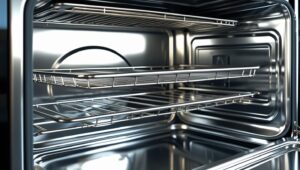
The Step-by-Step That Won’t Make You Hate Your Life [ Oven Cleaning ]
1. The Initial Assault (But Make It Lazy)
First, remove your oven racks (we’ll get to those later unless you forget which happens more than I’d like to admit). Make a paste with:
-
1 cup baking soda
-
1/4 cup water
-
1 squirt dish soap (the secret weapon)
Slather this everywhere except the heating elements (unless you enjoy electrical fires) and let it sit overnight. Here’s why – a 2024 study in Applied Surface Science proved baking soda’s alkaline properties break down polymerized grease [ Oven Cleaning ] better than most chemicals when given enough time.
“But my oven looks like a charcoal briquette!” – Double the paste. Add more soap. Walk away. This isn’t Instagram – real cleaning takes time.
2. The Vinegar Wake-Up Call [ Oven Cleaning ]
Next morning, spray vinegar everywhere you put the paste. It’ll fizz like a middle school science fair project (which is basically what this is). Let it sit 10 minutes then wipe with a damp cloth.
For stubborn spots, use your putty knife – it’s like when your kid glues LEGOs to the table and you need to carefully pry them off without damaging the surface.
Controversial-but-true opinion: Oven “degreasers” are mostly water with a tiny bit of surfactant. You’re paying for marketing, not chemistry.
3. Rack Rescue (No Bathtub Required)
Most guides tell you to soak racks in your tub. Terrible idea unless you enjoy scrubbing black gunk off porcelain later [ Oven Cleaning ] Instead:
-
Lay racks on a trash bag outside
-
Sprinkle baking soda generously
-
Spray with vinegar
-
Let sit 1 hour
-
Scrub with soapy water
-
Rinse
Lesson from the trenches: Did this inside once. My bathroom looked like a crime scene. Don’t be me.
Maintenance Mode (Because Prevention > Cure)
After your deep oven cleaning session (congrats by the way), here’s how to keep it tolerable:
-
Wipe spills immediately (I know, revolutionary)
-
Place foil on the oven floor (not racks – fire hazard)
-
Do a mini-clean monthly (15 minutes vs. 5 hours)
This changed everything for me – went from dreading oven cleaning to barely thinking about it.
P.S. About That ” Oven Cleaning ” Button…
It’s lying to you. That feature just burns everything at 900°F while pumping toxic fumes into your kitchen [ Oven Cleaning ] .Remember when I mentioned Dave? Yeah, his oven never fully recovered.
Final Pro Tip: For glass doors, mix lemon juice and water 1:1, spray on, wipe with newspaper (the ink acts as a mild abrasive). Works shockingly well unless you’re trying to read yesterday’s headlines while cleaning.
Need more cleaning hacks? Check our guide on kitchen deep cleaning secrets or this EPA fact sheet on safe cleaning alternatives. Now go forth and conquer that grease – you’ve got this.